Why Napoleon’s Symbol Was a Bee: Royal Honey Facts From History’s Most Famous Leaders
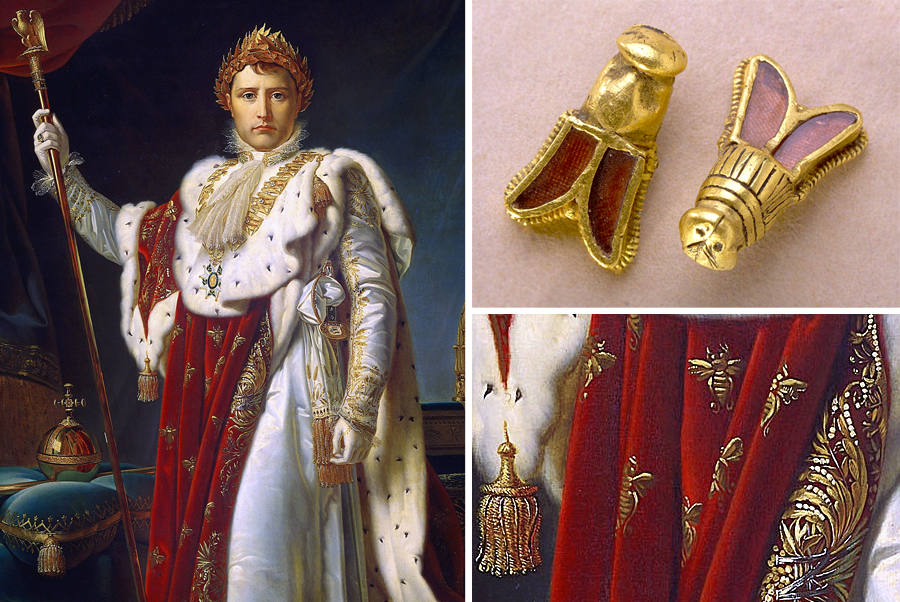
When Napoleon Bonaparte crowned himself Emperor of France in 1804, he made a deliberate choice that would puzzle historians for centuries. Why Napoleon’s symbol was a bee rather than the traditional fleur-de-lis became clear only when scholars examined his strategic vision for France. The golden bee represented industry, immortality, and resurrection, perfectly embodying Napoleon’s ambitious plans for his empire. This fascinating choice reveals how history’s most powerful leaders understood honey and bees as symbols of divine authority, economic power, and eternal life. From Cleopatra’s legendary honey beauty rituals to Queen Elizabeth I’s royal beekeepers, the relationship between rulers and bees has shaped civilizations throughout history.
Napoleon’s Symbol Was a Bee: The Strategic Choice
Understanding why Napoleon’s symbol was a bee requires examining the political climate of post-revolutionary France. Napoleon needed imagery that connected him to ancient French royalty while distinguishing his reign from the overthrown Bourbon monarchy. In 1653, golden bee ornaments were discovered in the tomb of Childeric I, founder of the Merovingian dynasty and father of Clovis, the first King of France. According to historical records at the Louvre Museum, these golden bees predated the fleur-de-lis by eight centuries, giving Napoleon a symbol with deeper historical legitimacy than his Bourbon predecessors.
Napoleon’s symbol was a bee for practical reasons as well as symbolic ones. The bee represented the ideal citizen in Napoleon’s vision of France: industrious, organized, and devoted to the collective good while serving their sovereign. He had golden bees embroidered on his coronation robes, carved into his throne, and stamped on official documents. The French National Archives preserve over 3,000 items bearing Napoleon’s bee emblem, demonstrating how thoroughly he integrated this symbol into imperial imagery. Military flags featured golden bees, and soldiers wore bee-shaped medals, reinforcing why Napoleon’s symbol was a bee at every level of society.
Ancient Egyptian Royalty and Sacred Honey
Long before Napoleon’s symbol was a bee, ancient Egyptian pharaohs claimed bees as divine messengers. Hieroglyphics from the Temple of Karnak show that the bee represented Lower Egypt, while the sedge plant symbolized Upper Egypt. When combined, these symbols represented unified royal authority over all Egyptian lands. The title “Beekeeper of Egypt” appeared in royal cartouches, signifying the pharaoh’s role as provider and protector of his people’s prosperity.
Cleopatra VII, Egypt’s most famous queen, incorporated honey into elaborate beauty rituals that became legendary throughout the Mediterranean world. Archaeological evidence from Alexandria reveals specialized honey preparation chambers in the royal palace where servants created cosmetic compounds. Cleopatra’s milk and honey baths, containing precise ratios of donkey milk and rare acacia honey, supposedly maintained her renowned beauty. Roman historians recorded that Mark Antony gifted Cleopatra the honey-producing regions of Jericho, recognizing honey’s value exceeded that of gold in maintaining royal luxury and diplomatic influence.
Medieval Monarchs and Monastery Honey
Medieval European royalty understood honey’s economic and spiritual significance, establishing royal apiaries that functioned as both agricultural centers and symbols of divine favor. Charlemagne issued capitularies requiring every royal estate to maintain beehives, with detailed regulations preserved in medieval manuscripts. These documents reveal that royal beekeepers held prestigious positions, often ranking above other agricultural overseers and reporting directly to the crown.
The connection between royalty and bees extended into religious symbolism. Saint Ambrose, patron saint of beekeepers, allegedly had bees land on his lips as an infant, prophesying his future eloquence. Medieval kings claimed similar divine bee encounters to legitimize their reigns. King Louis XII of France adopted the beehive as his personal emblem, preceding Napoleon’s bee symbol by three centuries. The Vatican Secret Archives document how Pope Urban VIII’s Barberini family incorporated three bees into their coat of arms, symbolizing the resurrection of Christ and the industrious nature of Christian virtue.
Russian Tsars and Imperial Honey Monopolies
The Russian Empire transformed honey from agricultural product to instrument of state power. Ivan the Terrible established imperial honey monopolies, controlling production and trade throughout his vast territories. Why Napoleon’s symbol was a bee becomes more understandable when considering how his Russian adversaries had already weaponized apiculture for centuries. The Romanov dynasty maintained the world’s largest royal apiaries, with some facilities housing over 100,000 hives according to records in the State Historical Museum of Russia.
Catherine the Great elevated beekeeping to scientific pursuit, establishing the first imperial bee research institute in 1775. She corresponded with Enlightenment philosophers about bee society as a model for human governance, ideas that influenced political thought across Europe. The Empress personally designed beehive monuments for palace gardens, using architectural bee symbolism to represent her empire’s industry and organization. These designs later inspired Napoleon’s own bee imagery, showing how royal honey symbolism transcended national boundaries and influenced international political aesthetics.
British Royalty’s Living Symbol
The British monarchy maintains the world’s oldest continuous royal beekeeping tradition, with official Palace beekeepers serving since medieval times. Queen Elizabeth I granted the first Royal Warrant to her beekeeper in 1590, establishing a hereditary position that continues today. The peculiar tradition of “telling the bees” about royal deaths and births demonstrates the intimate connection between British sovereignty and apiculture. When Queen Elizabeth II died in 2022, the Royal Beekeeper performed the ancient ceremony of draping hives in black ribbon and formally informing the bees of their new sovereign.
Buckingham Palace’s current beehives, installed in 2009, produce approximately 160 jars of honey annually for state banquets and diplomatic gifts. The Royal Collection Trust documents how this honey serves as living symbol of environmental stewardship and traditional values. Prince Charles, now King Charles III, expanded royal apiaries across multiple estates, using bee conservation to demonstrate monarchy’s relevance in addressing modern environmental challenges.
Asian Dynasties and Golden Honey Tributes
Chinese emperors valued honey as medicine, tribute, and spiritual substance. The Mandate of Heaven, legitimizing imperial rule, included references to the emperor as supreme beekeeper nurturing his subjects. Ancient texts from the Palace Museum in Beijing describe elaborate honey tribute ceremonies where regional governors presented rare honey varieties to demonstrate loyalty and prosperity.
Japanese shoguns incorporated bee imagery into samurai culture, with the Tokugawa clan using stylized bees on battle standards. The warrior’s relationship to his lord paralleled the bee’s devotion to its queen, creating powerful metaphors for feudal loyalty. Korean royalty developed unique fermented honey wines reserved exclusively for palace consumption, with recipes guarded as state secrets and production methods that influenced modern Asian honey cultivation techniques.
Modern Leaders and Symbolic Beekeeping
Contemporary world leaders continue the ancient tradition of symbolic beekeeping. The White House has maintained beehives since 2009, with presidential honey given as diplomatic gifts representing American agricultural heritage. Pope Francis blessed Vatican beehives in 2019, connecting modern environmental activism to ancient religious symbolism. Even Vladimir Putin, known for his strongman image, publicizes his interest in beekeeping as a way to project both power and pastoral care for Russian traditions.
Understanding why Napoleon’s symbol was a bee helps decode modern political imagery. The bee represents ideals that transcend specific ideologies: collective effort, natural hierarchy, productive labor, and sweet rewards for society’s work. These timeless concepts explain why leaders across cultures and centuries have claimed the bee as their emblem, recognizing in these small insects the grand principles of governance and divine authority.
Your Connection to Royal Tradition
The fascinating history of why Napoleon’s symbol was a bee and how royalty throughout history has revered honey and bees connects directly to modern beekeeping. At EcoBeezzz, we maintain the same dedication to quality that supplied royal courts for millennia. Our pure, raw honey carries forward traditions that once graced the tables of emperors and queens. Each jar represents not just natural sweetness, but a continuation of humanity’s oldest agricultural partnership.
Experience honey worthy of royalty with our carefully curated selection of premium varieties. From wildflower honey reminiscent of medieval monastery apiaries to specialized single-source varieties that would grace Napoleon’s imperial table, we offer products that honor this magnificent history. Visit ecobeezzz.ca today to explore our royal-quality collection, or contact us to discover how our honey connects you to thousands of years of regal tradition. Let the same natural gold that symbolized Napoleon’s empire enhance your table with EcoBeezzz’s commitment to excellence.